Blog
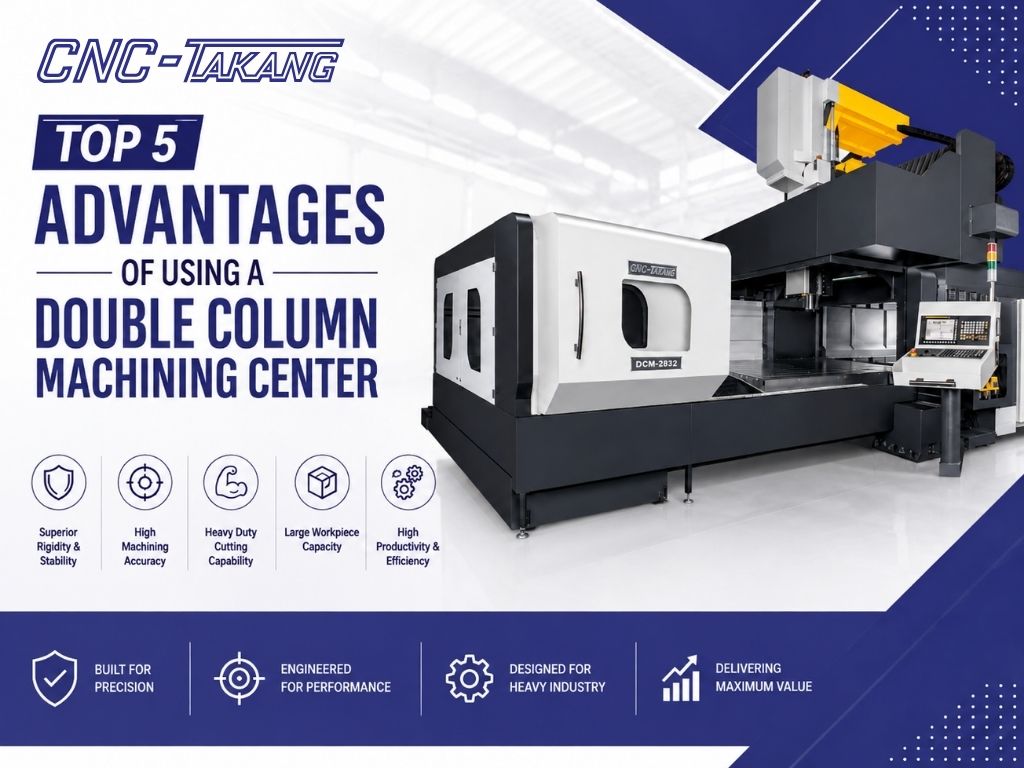
Top 5 Advantages of Using a Double Column Machining Center
When manufacturers need to machine large molds, heavy structural components, machine bases, or other oversized workpieces, a standard vertical machining center may not provide the working envelope or structural stability required for the job. A double column machining center is specifically designed to address these challenges by combining a large machining area with a rigid twin-column structure.
For manufacturers working with increasingly large and complex components, machine selection affects more than available travel. Rigidity, cutting stability, workpiece capacity, machining accuracy, and process efficiency all influence long-term productivity. CNC-TAKANG provides double column machining center solutions for demanding industrial applications, offering different machine sizes and configurations to accommodate a variety of large-part machining requirements.
This article examines five major advantages of using a double column machining center and explains why this machine structure continues to play an important role in large-scale manufacturing.
1. High Structural Rigidity for Stable Machining
One of the most important advantages of a double column machining center is its structural rigidity. Unlike a conventional C-frame vertical machining center, the machine uses two vertical columns connected by a crossbeam. This configuration creates a more balanced structure around the machining area and helps resist deformation under demanding cutting conditions.
Higher structural rigidity is particularly valuable during heavy roughing operations. When the spindle encounters significant cutting resistance, insufficient machine stiffness can contribute to vibration, tool chatter, dimensional variation, and poor surface quality. A rigid double column structure provides a more stable foundation for maintaining consistent tool engagement.
This structural advantage becomes increasingly important as workpiece size and cutting loads increase. Manufacturers processing large molds, machine bases, housings, or structural components can therefore benefit from greater machining stability throughout both roughing and finishing operations.
If you are still evaluating how this machine structure differs from other large-format machining equipment, see our guide on Double Column vs. Gantry-Type Machining Centers: What’s the Difference?
2. Greater Capacity for Large and Heavy Workpieces
A major reason manufacturers invest in a double column machining center is the ability to accommodate workpieces that exceed the capacity of standard machining centers. These machines typically provide larger tables, longer axis travels, and greater space between the columns, allowing manufacturers to process substantially larger components.
This capability is valuable for parts such as:
- Large mold and die bases
- Machine tool components
- Industrial equipment frames
- Large housings and structural parts
- Energy equipment components
- Aerospace structural components
However, buyers should not evaluate machine capacity based only on table dimensions. The distance between columns, X/Y/Z-axis travel, maximum table load, spindle clearance, fixture dimensions, and tool accessibility should all be considered together.
Allowing sufficient machining space around the workpiece can also reduce repositioning requirements and provide greater flexibility when future production involves larger components.
3. Improved Accuracy Across Large Machining Areas
Maintaining machining accuracy becomes more challenging as workpiece dimensions increase. A small positioning or structural error that has limited impact on a compact component can become much more significant across a large mold, plate, or machine structure.
The balanced twin-column configuration of a double column machining center helps create stable machining conditions across a large working envelope. Combined with appropriate guideway systems, spindle construction, servo control, and machine setup, the structure can help manufacturers maintain more consistent dimensional results over long machining strokes.
This is especially important when machining features that must maintain geometric relationships across different areas of the same workpiece. Large molds and machine bases, for example, may require accurate surfaces, pockets, holes, and reference features across substantial distances.
Reducing the need to move a large component between multiple machines or setups can also help minimize accumulated positioning errors. A suitable double column machining center allows more machining processes to be completed while the workpiece remains in a consistent setup.
4. Higher Efficiency Through Reduced Workpiece Repositioning
Handling large workpieces is very different from handling small precision components. Moving, rotating, re-clamping, and re-aligning a workpiece weighing several tons can require significant time, lifting equipment, and operator involvement.
A double column machining center with a sufficiently large machining envelope can reduce the need for repeated workpiece repositioning. When more features can be reached within the same setup, manufacturers can shorten non-cutting time and reduce the risk of alignment errors between operations.
This can provide several practical production benefits:
- Reduced setup and alignment time
- Less workpiece handling
- Lower risk of repositioning errors
- More consistent machining between related features
- Improved workflow for large and complex components
Machine size alone, however, does not guarantee productivity. Buyers should also consider spindle performance, tool capacity, axis travel, table dimensions, and the types of operations required. For a more detailed evaluation, read How to Choose the Right Double Column Machining Center for Your Workshop .
5. Flexible Machining Capability for Different Production Requirements
Double column machining centers are not limited to a single type of cutting operation. Depending on machine configuration and available options, they can support a combination of milling, drilling, tapping, boring, roughing, and finishing operations on large workpieces.
This versatility is particularly useful for manufacturers serving multiple industries or producing low-volume, high-value components with different machining requirements. Rather than dedicating separate large machines to individual operations, a properly configured machining center can consolidate more of the process within one platform.
Additional configurations such as suitable spindle systems, tool magazines, rotary or indexing devices, and specialized machining heads can further extend the range of applications. The appropriate configuration should always be selected according to the workpiece geometry, materials, tolerance requirements, and expected production volume.
For buyers who want a broader understanding of the machine's basic structure, working principle, and typical applications, see What Is a Double Column Machining Center? A Complete Guide for Industrial Buyers .
Double Column Machining Center Advantages at a Glance
| Advantage | Practical Benefit |
|---|---|
| High Structural Rigidity | Helps maintain stable cutting conditions under demanding machining loads. |
| Large Workpiece Capacity | Accommodates large molds, machine components, structural parts, and other oversized workpieces. |
| Stable Large-Area Machining | Supports consistent machining across long travel distances and large surfaces. |
| Reduced Repositioning | Helps reduce setup time and alignment errors for large components. |
| Flexible Machining Capability | Supports multiple machining processes and configurations for different production requirements. |
CNC-TAKANG Double Column Machining Center Solutions
CNC-TAKANG offers a range of double column machining centers designed for high-precision and heavy-duty machining of large workpieces. Different machine sizes and configurations allow manufacturers to select a solution according to workpiece dimensions, machining travel, table requirements, and production objectives.
The series focuses on structural stability, large machining capacity, and reliable cutting performance for demanding industrial applications. Depending on production requirements, manufacturers can evaluate suitable spindle configurations and machine specifications for applications involving large molds, heavy structural components, machine parts, and other oversized workpieces.
Explore the CNC-TAKANG Double Column Machining Center Series to compare available models and identify a suitable machine configuration for your application.
Conclusion
A double column machining center provides important advantages when workpiece size, machining stability, and structural rigidity become limiting factors for conventional machining equipment. Its twin-column structure, large working envelope, stable machining capability, reduced repositioning requirements, and flexible process options make it particularly valuable for large and demanding components.
However, selecting the right machine requires more than choosing the largest available model. Workpiece dimensions and weight, axis travel, table capacity, spindle requirements, machining processes, accuracy targets, and future production needs should all be evaluated together.
Contact CNC-TAKANG today to discuss your workpiece dimensions and machining requirements and explore a double column machining center configuration suited to your production needs.
Related Articles