Blog
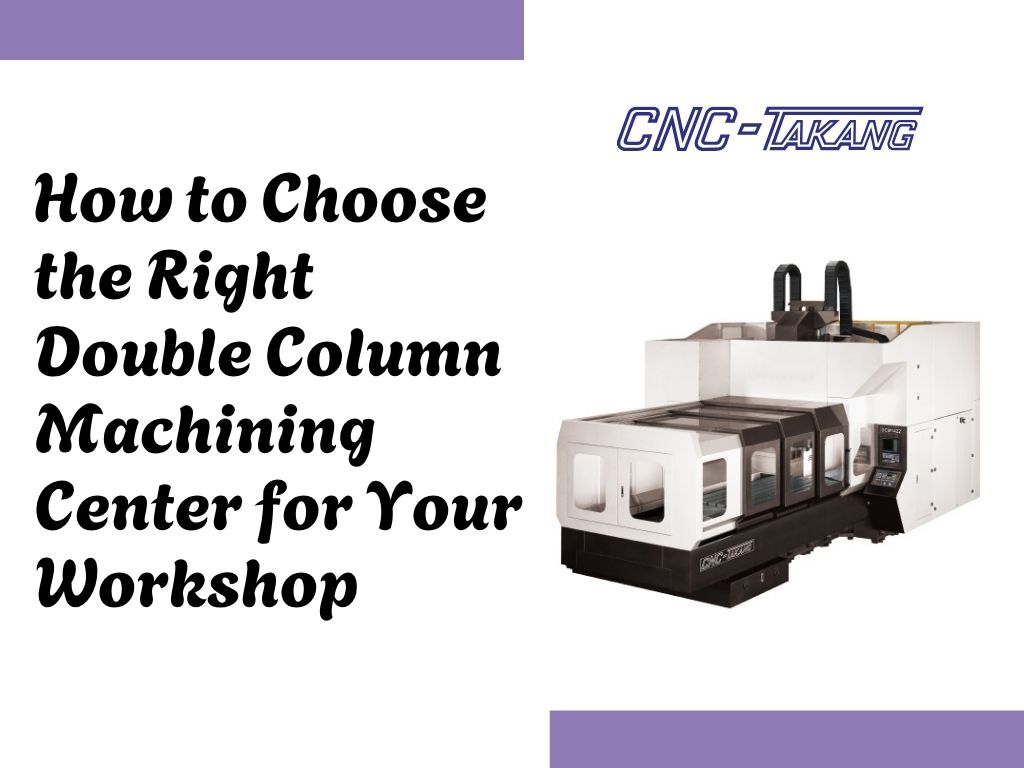
How to Choose the Right Double Column Machining Center for Your Workshop
In today’s competitive machining industry, the demand for precision, stability, and large-scale cutting capacity is higher than ever. For manufacturers handling heavy workpieces, molds, or components that require superior rigidity and accuracy, a Double Column Machining Center is one of the most efficient and reliable solutions. However, not all machines are created equal, and choosing the right one for your workshop involves understanding key specifications, structural differences, and operational needs.
At CNC-TAKANG, we have worked with manufacturers across diverse industries—from mold making to heavy machinery fabrication—helping them find the right double column machining center for their production goals. This guide will walk you through the essential factors to consider before investing in a machine that ensures long-term productivity and precision.
1. Determine Your Machining Requirements
Before diving into technical specifications, clearly define the type of parts you will be machining. Double column machining centers are ideal for large molds, dies, frames, and plate-type components, but the specific requirements—such as part dimensions, materials, and tolerances—will influence your choice.
If your shop regularly handles steel molds, cast iron components, or aluminum structures, ensure the machine’s spindle power and feed rate can accommodate both roughing and finishing operations. A model with a high-torque spindle and heavy-duty table load capacity will ensure stable performance even under demanding cutting conditions.
2. Check Machine Rigidity and Construction
The strength of a double column machining center lies in its column structure. The twin-column design provides excellent stability by distributing weight and cutting forces evenly across the frame. Look for a machine built with one-piece cast iron construction and box-type guideways, as these features minimize vibration and thermal distortion.
CNC-TAKANG’s double column machining centers are engineered with a high-rigidity frame and oversized guideways, allowing them to maintain precision during high-speed, heavy-load machining. This robust construction ensures long-term accuracy and reduces the need for frequent recalibration—critical for workshops aiming for consistent quality.
3. Evaluate the Spindle Performance
The spindle is the heart of any machining center, and for double column machines, torque and stability matter most. Choose a machine that offers sufficient spindle power and RPM range to handle both high-speed finishing and low-speed heavy cutting.
In mold manufacturing, for example, you may need a spindle speed of 6,000–10,000 RPM for detailed surface finishing, while heavy equipment manufacturing may prioritize torque over speed. A gear-driven or belt-driven spindle can deliver the necessary power for hard material cutting, while a direct-drive spindle suits precision applications requiring high rotational accuracy.
Some CNC-TAKANG models also include spindle oil cooling systems to maintain temperature stability during long machining cycles—essential for dimensional accuracy and surface finish consistency.
4. Table Size and Workpiece Capacity
One of the defining advantages of double column machining centers is their large working area. The table size and maximum load capacity determine what size of workpieces you can handle.
For instance:
-
Smaller models may offer table widths around 1,200 mm, suitable for mid-sized molds or precision components.
-
Larger models can exceed 3,000 mm in table width and support several tons of workpiece weight, ideal for heavy parts such as machine bases or industrial molds.
Ensure the machine’s table size matches your maximum expected part dimensions, with enough space for workholding and tool access. For high-mix production environments, adding automatic pallet changers can further improve workflow efficiency.
5. Axis Travel and Accuracy
Precision is the defining feature of any machining center, and axis travel range directly affects versatility. Consider the X, Y, and Z axis travel distances, ensuring they cover your machining envelope with minimal repositioning.
High-quality double column machines feature linear guideways or box guideways for different needs:
-
Linear guideways allow higher speeds and smoother motion, suitable for lighter cuts and high-accuracy finishing.
-
Box guideways provide greater load capacity and damping for heavy machining.
CNC-TAKANG’s double column machining centers use precision-ground guideways and servo motor drives to ensure stable movement, repeatable positioning, and micron-level accuracy—an essential factor for workshops aiming to meet tight tolerances in large parts.
6. CNC Control System and Automation Features
Modern double column machining centers integrate advanced CNC control systems like FANUC or Mitsubishi to enhance precision and productivity. Look for machines that offer:
-
High-speed data processing
-
Tool life management
-
Adaptive feed rate control
-
Automatic tool changers (ATC) with sufficient capacity
Automation-friendly features, such as automatic tool length measurement, collision detection, and temperature compensation, can further improve process reliability and reduce operator intervention.
For workshops planning future expansion, consider options that allow integration with pallet pools, probing systems, or robotic automation for continuous production.
7. After-Sales Support and Maintenance
Investing in a double column machining center is a long-term decision, and reliable service support is just as important as machine performance. Choose a supplier that offers:
-
Comprehensive training programs
-
Preventive maintenance schedules
-
Ready access to spare parts and technical support
At CNC-TAKANG, our goal goes beyond delivering high-performance machines—we ensure every customer receives dedicated technical assistance and responsive after-sales service. Our worldwide support network guarantees that your production stays efficient and uninterrupted.
Conclusion
Selecting the right Double Column Machining Center is about balancing capacity, precision, and productivity with your shop’s specific needs. From spindle torque to table dimensions, each specification plays a crucial role in determining overall performance and return on investment.
By choosing a trusted supplier like CNC-TAKANG, you gain access to decades of engineering expertise, durable machine designs, and global support. Whether your workshop focuses on mold manufacturing, heavy part machining, or precision tooling, CNC-TAKANG’s double column machining centers are built to deliver the rigidity, accuracy, and reliability your operations demand.