Blog
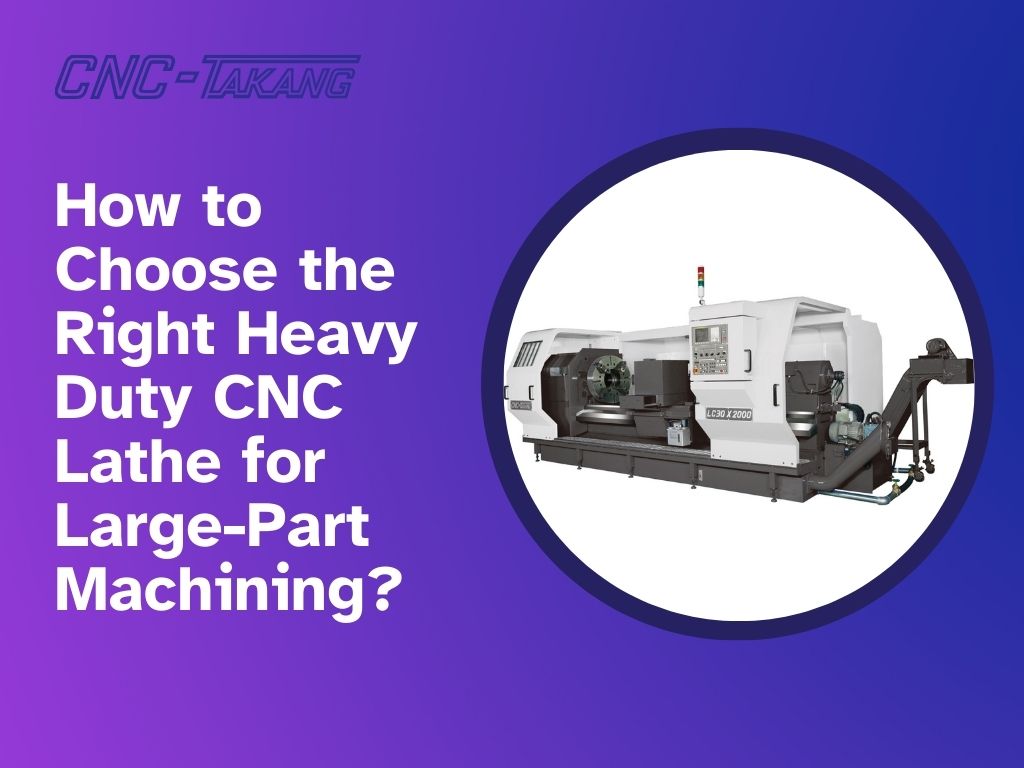
How to Choose the Right Heavy Duty CNC Lathe for Large-Part Machining?
Large-part machining presents a unique set of challenges that standard turning machines are often unable to handle efficiently. Industries such as energy equipment, shipbuilding, heavy machinery, and steel processing require machines capable of turning oversized components while maintaining stability, precision, and long-term reliability. In these demanding environments, selecting the right heavy duty CNC lathe becomes a critical factor in ensuring productivity and machining quality.
With extensive experience supplying turning solutions for large-scale manufacturing, CNC-TAKANG works closely with manufacturers who need reliable equipment for heavy-duty applications. From long shafts and rollers to massive housings and industrial components, choosing the correct heavy duty CNC lathe can significantly improve machining performance, reduce vibration, and ensure consistent cutting accuracy.
In this guide, we will explore the key factors manufacturers should consider when selecting a heavy duty CNC lathe for large-part machining.
Understanding What Defines a Heavy Duty CNC Lathe
Before selecting a machine, it is important to understand what distinguishes a heavy duty CNC lathe from a standard CNC turning machine.
A heavy duty CNC lathe is specifically designed to machine large, heavy, and often difficult materials. These machines typically feature reinforced structures, powerful spindle drives, and wide bed designs to support extreme cutting loads.
Key characteristics often include:
-
Large swing over bed capacity
-
High spindle torque for heavy material removal
-
Wide box-way guideways for rigidity
-
Strong tailstock support for long workpieces
-
High load capacity for oversized components
These structural elements ensure stable cutting performance when machining large parts that would otherwise cause vibration or deflection on lighter machines.
Evaluate the Maximum Workpiece Size and Weight
One of the most important factors when choosing a heavy duty CNC lathe is the maximum workpiece size your machine must accommodate.
Manufacturers should evaluate:
-
Swing over bed
-
Swing over cross slide
-
Maximum turning length
-
Maximum workpiece weight
Large components such as industrial rollers, turbine shafts, or steel mill parts may require significant swing capacity and bed length. Selecting a machine with insufficient capacity can restrict machining flexibility and limit future production possibilities.
When evaluating machine specifications, it is always advisable to consider not only current parts but also potential future requirements.
Consider Spindle Power and Torque
Heavy-duty turning often involves removing large amounts of material from tough workpieces such as forged steel, cast iron, or high-strength alloys. For this reason, spindle power and torque are critical factors.
A powerful spindle system allows the machine to maintain cutting performance during heavy roughing operations without losing stability. Higher torque also helps maintain consistent cutting speeds when machining large diameters.
Manufacturers working with large parts should prioritize machines equipped with strong spindle drives capable of maintaining performance under continuous heavy cutting conditions.
Machine Structure and Rigidity Matter
The structural design of the machine has a direct impact on machining stability and precision. A true heavy duty CNC lathe typically uses a flat bed or box-way structure designed to minimize vibration during heavy turning operations.
Rigid construction improves:
-
Cutting stability
-
Surface finish quality
-
Tool life
-
Dimensional accuracy
Machines designed for heavy-duty turning usually incorporate wide guideways, reinforced bed castings, and large carriage systems to support the cutting forces generated when machining oversized workpieces.
Tailstock and Workpiece Support
Long shafts and cylindrical components often require additional support during machining to prevent deflection or vibration.
A heavy duty CNC lathe should therefore include a robust tailstock system capable of supporting heavy workpieces while maintaining precise alignment with the spindle.
Additional support systems such as steady rests and follow rests are also common in large-part machining environments. These accessories help stabilize long workpieces and improve machining accuracy.
CNC Control and Automation Capabilities
While structural strength is essential, modern heavy-duty machining environments also benefit from advanced CNC control systems.
A reliable control system enables:
-
Accurate tool path management
-
Efficient roughing and finishing cycles
-
Reduced setup times
-
Improved repeatability in production
Many manufacturers also integrate automation features such as automatic tool changers, chip conveyors, and programmable tailstocks to improve productivity in high-volume environments.
Heavy Duty CNC Lathe Solutions from CNC-TAKANG
CNC-TAKANG provides a range of heavy duty CNC lathes engineered for large-part machining across multiple industries. These machines emphasize strong structural design, high-torque spindle systems, and wide machining envelopes to support demanding turning operations.
Designed for applications such as energy equipment manufacturing, steel processing, and heavy machinery production, CNC-TAKANG lathes offer stable cutting performance and reliable long-term operation. Their flat-bed construction and robust carriage systems allow manufacturers to machine oversized components with greater confidence and efficiency.
Frequently Asked Questions (FAQ)
Q1: What industries commonly use heavy duty CNC lathes?
Heavy duty CNC lathes are commonly used in industries such as energy equipment manufacturing, shipbuilding, steel processing, heavy machinery production, and oil and gas equipment manufacturing.
Q2: What is the difference between a standard CNC lathe and a heavy duty CNC lathe?
A heavy duty CNC lathe is designed with stronger structural rigidity, higher spindle torque, and larger machining capacity to handle oversized or heavy workpieces.
Q3: Why is machine rigidity important in heavy turning?
Higher rigidity reduces vibration during cutting operations, which improves machining accuracy, tool life, and surface finish quality.
Q4: Can heavy duty CNC lathes machine very long shafts?
Yes. Many heavy duty CNC lathes are designed with long bed lengths and tailstock support to accommodate long shaft machining.
Q5: What factors should buyers prioritize when selecting a heavy duty CNC lathe?
Important factors include swing capacity, spindle power, structural rigidity, maximum workpiece weight, CNC control system, and available support accessories.
Conclusion
Selecting the right heavy duty CNC lathe is essential for manufacturers involved in large-part machining. Machine capacity, spindle power, structural rigidity, and workpiece support systems all play a crucial role in achieving stable and accurate machining results.
By carefully evaluating these factors, manufacturers can ensure their turning equipment is capable of handling demanding production tasks efficiently and reliably.
If your production requires stable machining of large or heavy components, the CNC-TAKANG team can help evaluate your application and recommend suitable heavy duty CNC lathe solutions tailored to your machining needs.
Contact CNC-TAKANG today to learn more about heavy duty CNC lathe options for large-part machining applications.