Blog
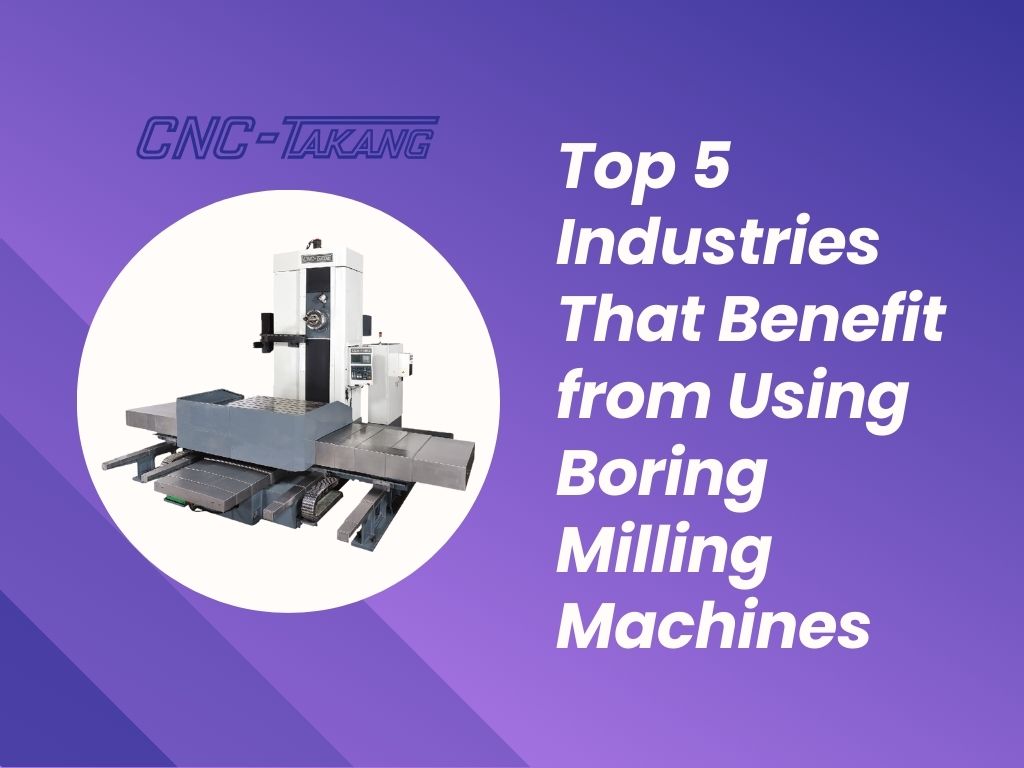
Top 5 Industries That Benefit from Using Boring Milling Machines
As industrial components continue to increase in size, complexity, and performance requirements, manufacturers face growing challenges in maintaining accuracy while improving productivity. Traditional machining equipment often struggles to handle large, heavy, or high-precision parts efficiently. This is where boring milling machines play a critical role in modern manufacturing.
With extensive experience in supplying heavy-duty machine tools, CNC-TAKANG works closely with manufacturers across a wide range of industries to understand the real challenges of large-part machining. By focusing on rigidity, precision, and long-term stability, CNC-TAKANG helps customers evaluate and implement boring milling machine solutions that support demanding production environments.
1. Energy and Power Generation Industry
The energy sector relies on large, high-strength components such as turbine housings, generator frames, valve bodies, and pressure vessels. These parts often require deep-hole boring, large-surface milling, and stable dimensional accuracy over long machining cycles.
Boring milling machines are well suited to this industry because they offer high structural rigidity, powerful spindle torque for heavy material removal, and long travel ranges that accommodate oversized workpieces. This combination ensures reliable machining performance for critical energy components where precision and safety are essential.
2. Shipbuilding and Marine Engineering
Shipbuilding involves machining some of the largest metal components used in manufacturing, including engine blocks, propulsion-system components, stern frames, and large structural assemblies. These workpieces are typically thick steel plates or large castings and often require machining on multiple surfaces.
Boring milling machines support marine manufacturing by enabling multiple machining operations to be completed in a single setup. This reduces re-clamping, improves alignment accuracy, and helps maintain consistent quality across large surfaces and long parts.
3. Heavy Machinery and Construction Equipment
Manufacturers of heavy machinery—such as excavators, cranes, mining equipment, and industrial presses—depend on large structural components that must withstand extreme loads and harsh operating conditions. Common workpieces include machine bases, frames, gear housings, and long shafts.
Boring milling machines enable aggressive roughing with controlled vibration, precise machining of large mating surfaces, and consistent tolerances across thick, heavy components. These capabilities contribute directly to the durability, reliability, and service life of heavy equipment products.
4. Aerospace and Defense Industry
Although aerospace manufacturing is often associated with high precision rather than large part size, many structural components, fixtures, and tooling systems still require large-format machining. Defense applications may also involve heavy and complex structures that demand both rigidity and accuracy.
Boring milling machines are suitable for these applications because they maintain repeatable accuracy across large work envelopes while handling difficult-to-machine materials. Their ability to integrate boring and milling operations also helps reduce process steps without compromising quality.
5. Mold, Die, and Tooling Industry
Large molds and dies used in automotive, appliance, and industrial manufacturing require exceptional dimensional control and surface quality. Mold bases are often extremely heavy and require multi-face machining with minimal deviation.
Boring milling machines improve mold and tooling production by minimizing repositioning, supporting stable machining on large plates, and allowing both heavy roughing and controlled finishing operations. This results in shorter lead times and more consistent surface finishes.
CNC-TAKANG Boring Milling Machine Solutions
CNC-TAKANG’s boring milling machine series is designed to meet the demands of large-part and heavy-duty machining across multiple industries. The lineup emphasizes high structural rigidity, wide machining envelopes, and stable cutting performance—key requirements for machining oversized workpieces with tight tolerances.
Key features include robust column and bed construction to suppress vibration during heavy cutting, long-axis travel configurations to accommodate large housings and plates, and powerful spindle systems suitable for both deep-hole boring and large-area milling. These machines are engineered to maintain accuracy throughout extended machining cycles, ensuring consistent results in demanding applications.
In addition, CNC-TAKANG boring milling machines offer flexible configurations, allowing manufacturers to select appropriate table sizes, spindle options, and CNC control systems based on their production requirements. This adaptability makes the series well suited for industries such as energy equipment, shipbuilding, heavy machinery, and large mold manufacturing.
Related product series: https://www.cnctakang.com/en-US/pfilter2_10-boring-machine
Frequently Asked Questions (FAQ)
Q1: What is the main advantage of using a boring milling machine for large components?
The primary advantage is the ability to perform multiple machining processes—boring, milling, drilling, and tapping—on large and heavy workpieces within a single setup, improving both accuracy and efficiency.
Q2: Are boring milling machines limited to heavy industries?
No. While they are essential in heavy industries, boring milling machines are also widely used in mold and tooling, aerospace fixtures, and applications requiring large-format precision machining.
Q3: What types of workpieces are most suitable for boring milling machines?
Typical workpieces include large housings, machine bases, frames, turbine components, mold plates, and parts requiring deep-hole boring or multi-face machining.
Q4: What should manufacturers consider when selecting a boring milling machine?
Key factors include workpiece size and weight, table load capacity, spindle torque, axis travel, CNC control system, and potential future automation requirements.
Q5: Can boring milling machines support automation and smart manufacturing?
Yes. Many modern boring milling machines can be equipped with probing systems, pallet solutions, and automation interfaces to support efficient and scalable production.
Conclusion
Boring milling machines have become essential tools for industries that depend on large, precise, and high-performance components. From energy and shipbuilding to aerospace and mold manufacturing, these machines help manufacturers reduce setup time, maintain stable tolerances, and improve overall machining efficiency.
As industrial requirements continue to evolve, choosing the right boring milling machine becomes critical to long-term productivity and machining stability. CNC-TAKANG works closely with manufacturers to evaluate application requirements and recommend suitable boring milling machine solutions.
Contact CNC-TAKANG today to discuss your large-part machining challenges and explore the right solution for your operation.